

Global Dialogues - convenings
Global Dialogues
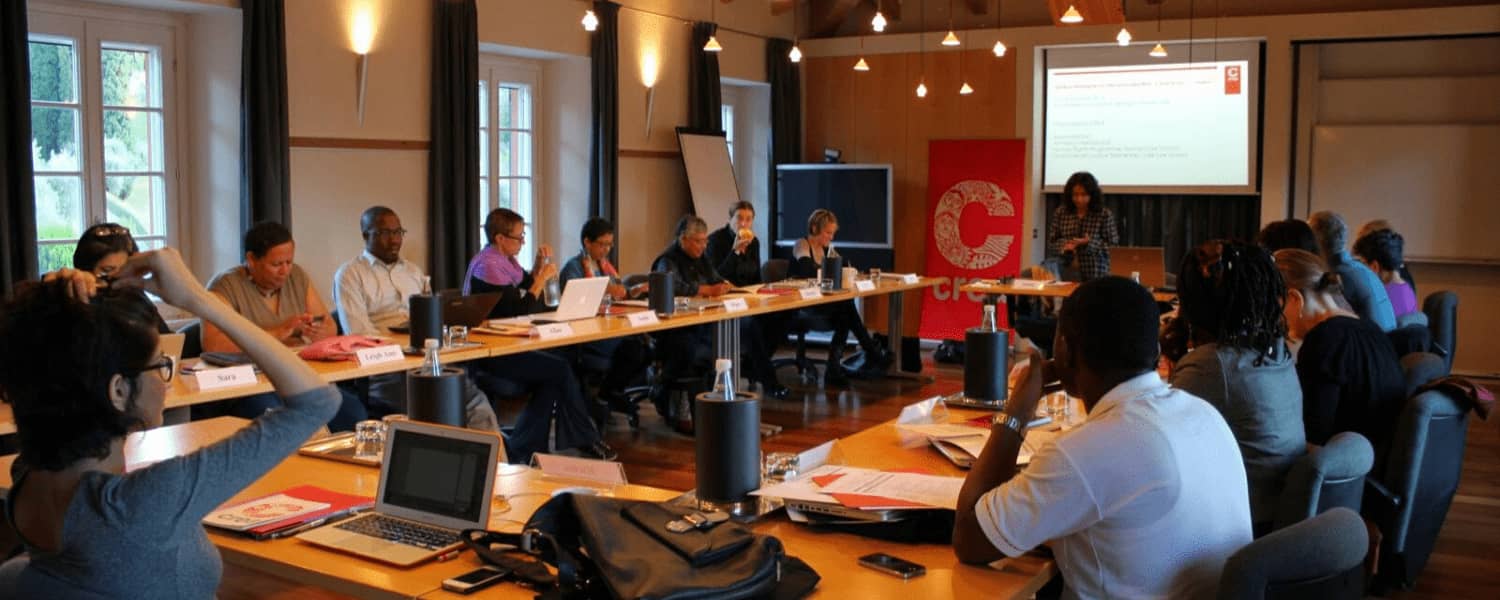
Critical Spaces to Think and Act: CREA’s Global Dialogues
The 13 global dialogues CREA has organized since 2004 weave together decades of conversations by feminist activists who have helped push limits and break boundaries. They have challenged the ability of women’s movements to become more inclusive of lesbian, trans people, women with disabilities and sex workers. They have clarified points of confusion, such as how policy frameworks can adopt consent as a sexual standard, or understanding gender-based violence as both a health and human rights issue.
The impact of CREA’s global dialogues stretches far beyond the boundaries of time and space where each conversation is held. New relationships and collaborations are fostered that endure for years. Documentation of learnings and recommendations coming out a global dialogue become valuable resources for other activists and organizations. Most importantly, activists, donors and other movement actors shift their views and approaches in response to what they have learned.
Impact and Value of Global Dialogues
Challenging Discourse
Global dialogues provide space and visibility for ideas and strategies from people not perceived as “experts,” but who work at a grassroots level and have deep knowledge of how frameworks and strategies get translated on the ground. They are able to challenge the dominant discourse around sexuality, gender and rights.
Example: Subaltern Voices Seminar Series (2006-2007) provided a forum for grassroots women leaders from the Global South to speak to audiences in the United States on issues of women’s human rights from feminist, Southern-based perspectives.
Producing and Disseminating New Knowledge
CREA captures content discussed at global dialogues in knowledge products that build on the original conversation and reach a broader set of stakeholders. Reports are often translated into other languages, including Spanish, French, Arabic, and Kiswahili, while new digital tools allow wide dissemination of global dialogue learnings.
Example: Short videos produced from the Global Dialogue on Disability, Sexuality and Rights summarize key themes covered in multiple accessible formats.
Sparking Collaborations
By bringing people together to think and act, dialogues spark collaborations across regions, disciplines, and movements. Many of these newly built relationships have led to joint initiatives and deeper alliances around sexuality, gender and rights.
Example: Following dialogues on sex work in 2008-2009, Point of View and Sangram collaborated to produce a publication titled Of Veshyas, Vamps, Whores and Women.
Influencing donors
Donors are always represented in CREA’s global dialogues as a strategy to influence funders’ thinking and shift their approaches to issues, constituencies, and strategies.
Example: Donor participation in 2009’s “Ain’t I a Woman” dialogue and dissemination of its outcome paper paved the way for shifts in how women’s rights funders viewed sex workers. Soon after, Mama Cash decided to seed the Red Umbrella Fund, the first global fund exclusively dedicated to supporting the sex workers’ movement.
Bridging Divides Within and Between Movements
Global dialogues are safe spaces for honest, sometimes painful analysis of the current state of the global feminist movement that can break conceptual or strategic impasses. Clarity gained can help movements reexamine frameworks or positions on key issues.
Example: In the early 2000s, global dialogues between sex workers and violence-against-women activists prompted a rethinking of the view that sex work is inherently exploitative and synonymous with trafficking, and produced non-negotiable principles that both movements could agree to follow.
Reports on Global Dialogues
Resource
Building Alliances Globally to end Violence Against Women
July 2004, Bellagio, Italy - The Global Dialogue Series
The first global dialogue explored emerging issues and challenges in the global efforts to end violence against women.
CREA convened activists and grant makers who based their work on the understanding that women’s roles can be multiple and intersecting – as victims, survivors and perpetrators – and have used innovative strategies to deal with prevention and service issues. Participants articulated a complex understanding of the forms, causes, discourse and strategies to address violence against women.
Resource
Inter-South Dialogues
February 2005, New Delhi, India - The Global Dialogue Series
The Inter South Dialogue was an effort to link the discourses on sexual and reproductive health and rights (SRHR) between organisations working in the global South, whose views were not included in SRHR discourse.
CREA partnered with INFORM, MASUM, North East Network, SAMA, and TARSHI to hold a strategic dialogue on sexual and reproductive rights among activists working in Latin America and South Asia.
The dialogue focused on the meanings of SRHR across contexts, the role of sexuality in these discussions, and how these terms are being integrated into health service delivery systems.
Resource
Models of Resistance
October 2005, Bangkok, Thailand - The Global Dialogue Series
The Women’s Health and Human Rights Initiative of Columbia University collaborated with CREA, Women Living Under Muslim Laws (WLUML), AWID, and INFORM. The global dialogue highlighted that even during times of utter despair, ordinary people organize to claim justice. These efforts—from families who lost relatives to 9/11, survivors of conflict in Sri Lanka and Rwanda, and Mothers of the Disappeared in Argentina—emerge from those who are often not part of organized movements, and deserve greater visibility as strategic models of resistance.
Resource
Strengthening Spaces: Women's Human Rights in Social Movements
November 2005, Bangkok, Thailand - The Global Dialogue Series
Co-hosted by the Association for Women’s Rights in Development (AWID), this global dialogue explored how diverse social movements—including labor, development, dalit, public health, sexuality, human rights, and indigenous people—understand and address women’s human rights, and how women’s rights activists have built alliances with other social movements.
Resource
Listening to Each Other: A Multigenerational Dialogue on Activism and Women’s Rights
October 2007, New Jersey, USA - The Global Dialogue Series
In partnership with the Center for Women’s Global Leadership and the Youth Coalition, this global dialogue brought together feminist activists from different generations to discuss and share experiences about intergenerational challenges and barriers affecting feminist movements and organizations, alliance building, and future strategies.
Resource
Sex Work and Trafficking: A Donor Activist Dialogue on Rights and Funding
December 2008, New York, USA - The Global Dialogue Series
In partnership with the Global Network of Sex Work Projects and the Open Society Foundations’ Sexual Health and Rights Program, CREA hosted this global dialogue to examine the consequences of language, policies, and programs that conflate the concepts of sex work, migration and trafficking.
Recommendations focused on how to leverage existing rights-based models that stop trafficking into the sex sector, and support anti-trafficking efforts that affirm the rights of sex workers and others affected by anti-trafficking legislation.
Resource
Ain’t I A Woman?: A Global Dialogue Between the Violence Against Women and Sex Worker’s Movement
March 2009, Bangkok, Thailand - The Global Dialogue Series
CREA, in partnership with SANGRAM’s Centre for Advocacy on Stigma and Marginalization (CASAM), brought together activists from the women’s movement and the sex workers’ movement to discuss the violence faced by sex workers, why it is ignored by the women’s movement, and how it can be addressed by anti-violence against women campaigns. This was the first time that many people from the violence against women and sex workers rights’ movements were able to gather at a global level to discuss sex work without a heated debate or strong oppositional stances on the issue of sex work as work.
Resource
Decriminalisation, Choice and Consent
October 2014, Bellagio, Italy - The Global Dialogue Series
CREA, along with Amnesty International, the Human Rights Programme at Harvard Law School, and the Global Health Justice Partnership at Yale Law School organized a global dialogue on “Decriminalisation, Choice and Consent.” The main focus of the dialogue was to interrogate the conceptual underpinnings of consent, and how consent is articulated and (de) criminalized within diverse contexts, including sexual agency, orientation, marriage, identity and sexual and reproductive health and rights.
Resource
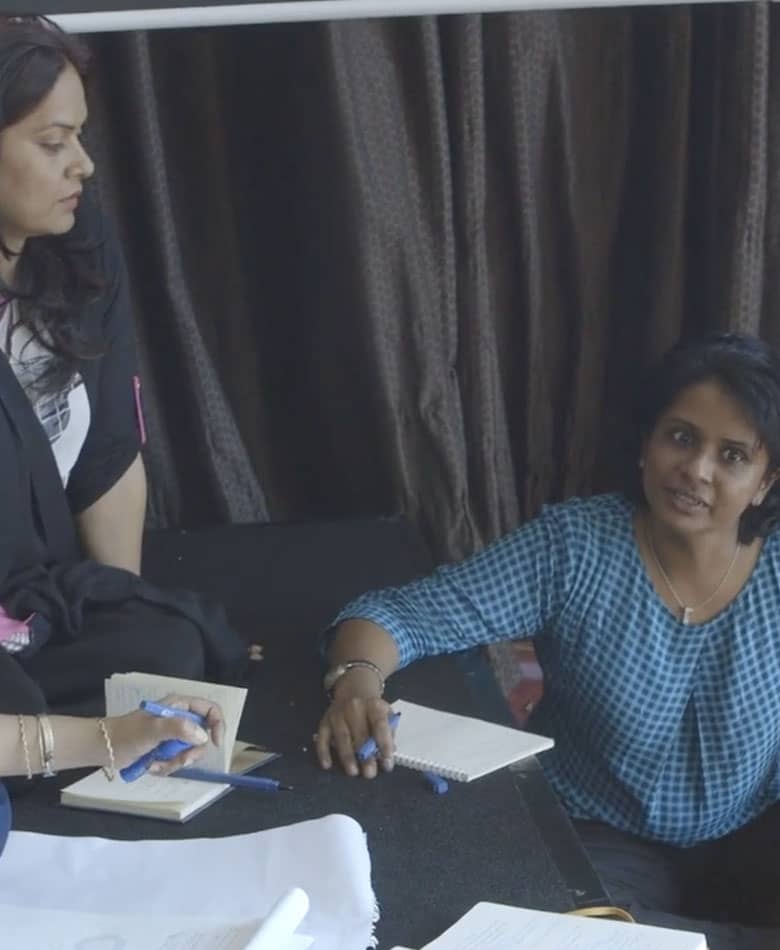
Global Dialogue, 2017
Activists discuss how medical systems stigmatise non-normative bodies and sexualities
Video
To address key tensions and fractures that divide the women’s rights, LGBTQI, sexual and reproductive rights, and disability rights/justice movements. Two priority themes included movement critiques of medicalization and the divide around access to legal abortion on grounds of fetal impairment. The goal was to identify strategies for movements to foreground an intersectional and inclusive approach to disability and sexuality.
Resource
“Fetal Rights” and Women’s Citizenship: Implications of the ‘New’ Gender Ideology
December 2017, Marrakech, Morocco - The Global Dialogue Series
CREA identified the need for a convening that critiques the meanings and implications of anti-gender and anti-rights politics from a feminist perspective. Globally, the trend across national and cultural contexts has been to endow the fetus with rights and social meanings separate from – and often more valued – than those of women.
The global dialogue used the construct of “fetal rights” or “fetal personhood” as a lens through which to examine how anti-gender politics works in practice to deny women’s rights. Specifically the assertion of fetal rights in opposition to, and more deserving than, the rights of women was critically examined through the way language is constructed, cultural representations, and law and policy.
Resource
Deconstructing ‘Gender’, Reconstructing Alliances
New York, U.S.A, 2018 - The Global Dialogue Series
CREA, in partnership with the Global Health Justice Partnership of the Yale Law School and the School of Public Health, hosted a dialogue to expand understandings of gender and its relationship to identities, expressions and rights.
The project addressed the urgent need for coherent, rights-promoting work regarding gender to proceed across human rights norms and principles in order to minimize protection gaps and to reflect the rich understandings of gender that social movements and scholars have articulated.
Resource
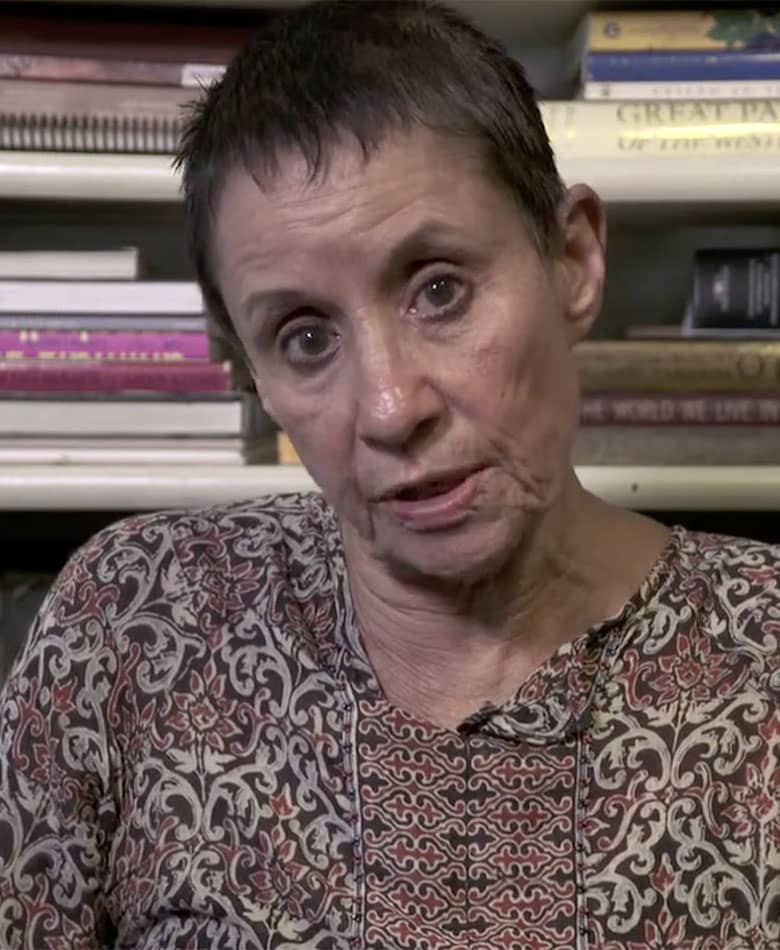
Global Dialogue, 2018
On advocacy strategies, decriminalization of abortion and SRHR for women with disabilities
Video
CREA hosted a global dialogue aimed at bridging the long-standing divisions between disability rights activists and sexual and reproductive health and rights (SRHR) activists that have historically prevented these movements from working in solidarity.
This cross-movement conversation allowed both movements to come to terms with historical exclusions, build trust, and arrive at some degree of consensus to develop a political agenda that advances the SRHR of women and girls with disabilities. The dialogue led to the creation of the Nairobi Principles on Abortion, Prenatal testing and Disability.