

Tag annual reports
CREA develops publications and knowledge resources, in English and Hindi, in the fields of sexuality, reproductive health, gender, and human rights. These publications foreground global South perspectives and reduce the paucity of resources for Hindi-speaking activists and organisations.
All these resources and materials are made available here on the website, and are mailed out to the organisations and activists that CREA works with and disseminated through various other channels.
annual reports
19 Articles with tag
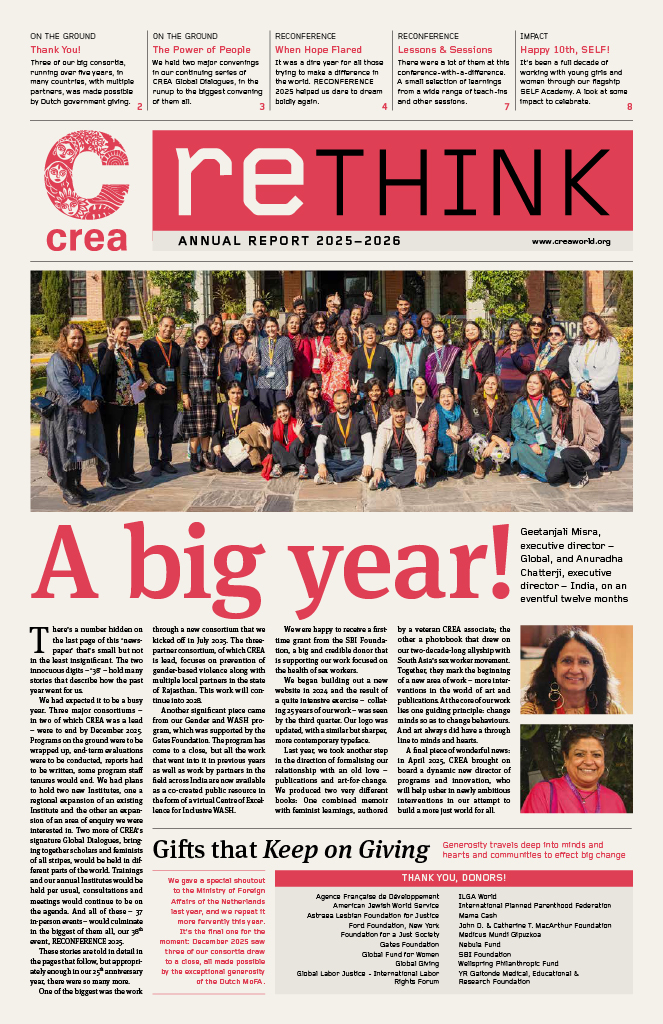
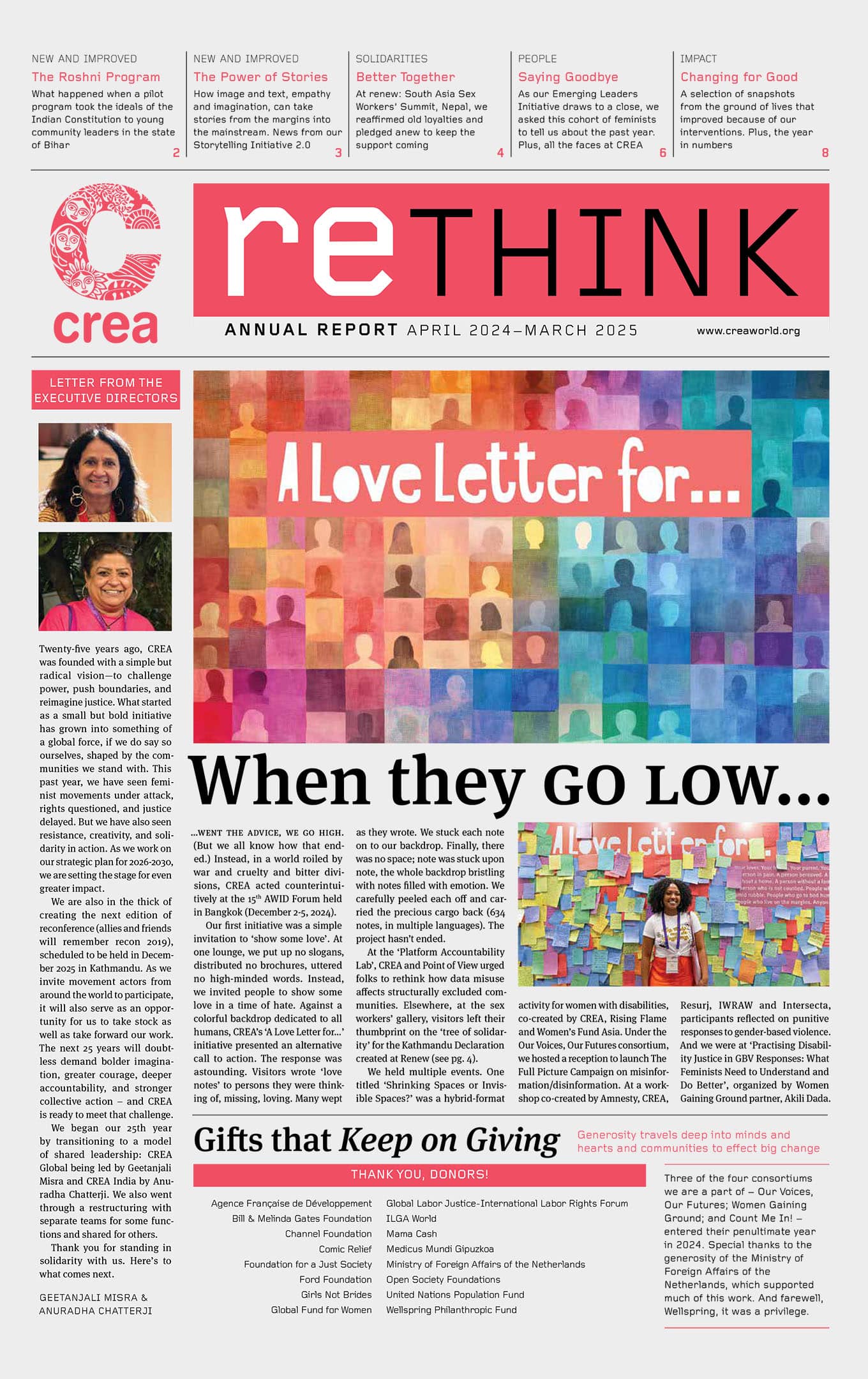
In a world roiled by war and cruelty and bitter divisions, CREA acted counterintuitively at the 15th AWID Forum held in Bangkok in December 2024. Our first initiative was a simple invitation to ‘show some love’.
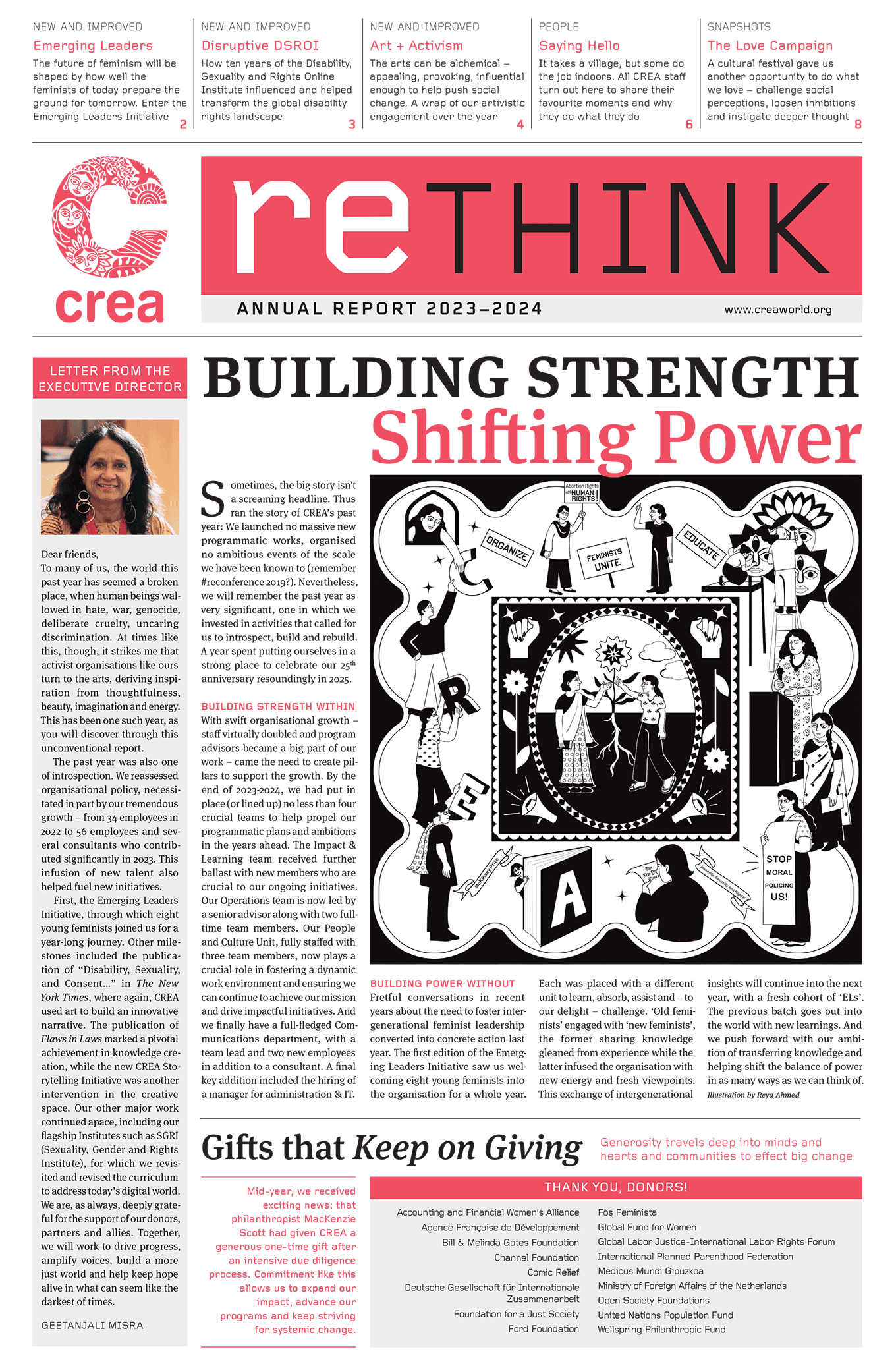
During the past year, we reassessed organisational policy, necessitated in part by our tremendous growth – from 34 employees in 2022 to 56 employees and several consultants who contributed significantly in 2023.
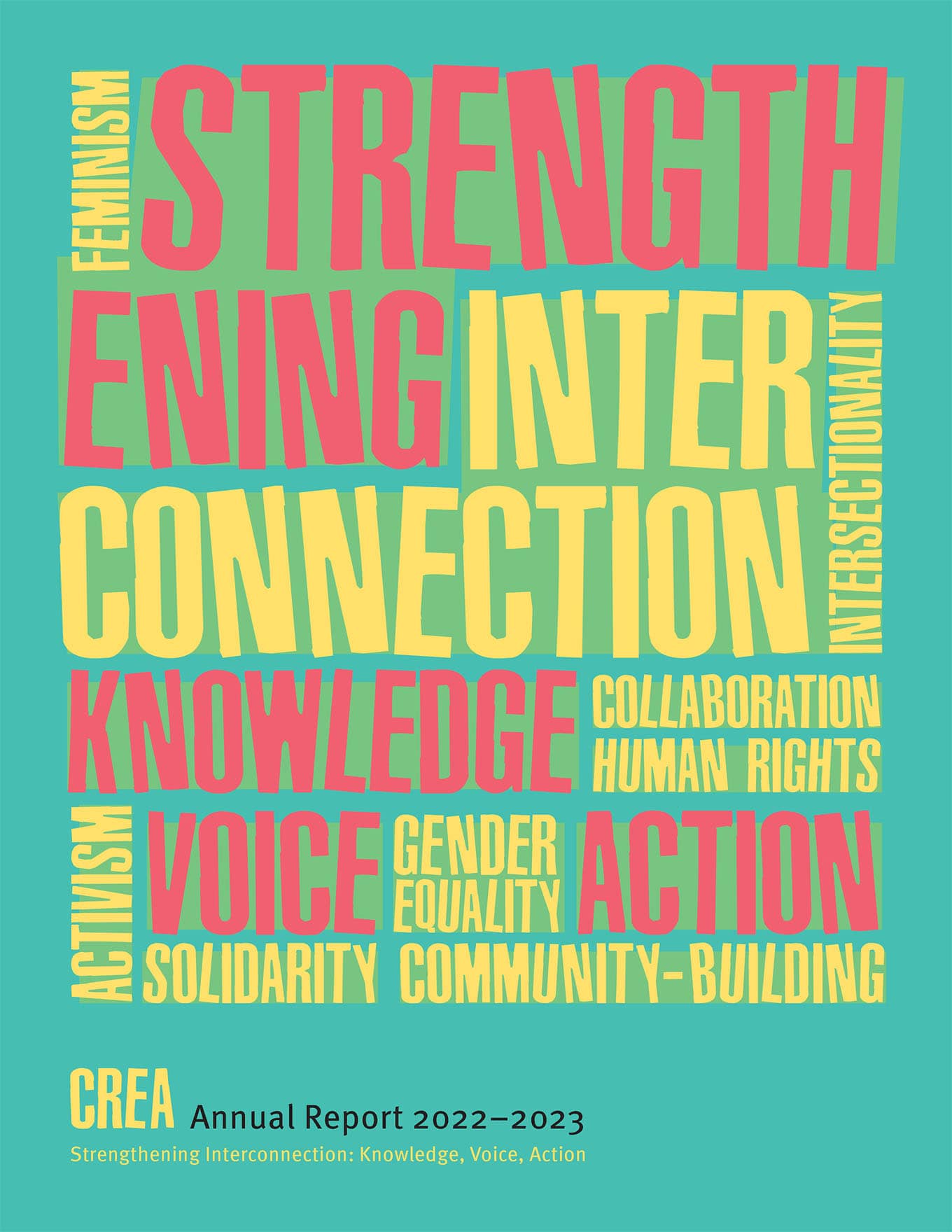
2022 has been a year of deepening partnerships and contributing to building resilient networks. Both consortia that CREA leads — Women Gaining Ground (WGG) and OVOF — expanded work in their second year.
In the past year, CREA launched a new strategic plan, led two large consortia, planned a Center of Excellence for Gender and WASH, and established the first CREA fellowship.
The complications and challenges that have come with the COVID-19 crisis have also pushed us to reconsider the otherness that has been reinforced or redefined by the pandemic.
CREA has never shied away from big and difficult discussions, which is how we arrived at the bold idea for a global conference dedicated to rethinking, reimagining and rebooting our movements.
In March, we were invited by the UN Special Rapporteur on the Rights of Persons with Disabilities to present the Nairobi Principles to a UN Expert Group Meeting.
CREA is a part of an alliance of organisations called the Sexual Rights Initiative (SRI), which advocates at the UN Human Rights Council (UNHRC) and recommends amendments to draft resolutions.
The targeting of NGOs and shrinking of civil society spaces has continued if not worsened in the last year and the trend is evident in all the regions that CREA works in (South Asia, East Africa and Middle East and North Africa).
CREA conducted the Sexuality Gender and Rights Alumni Institute (SGRI) in Istanbul, Turkey from 20-27 June 2015.
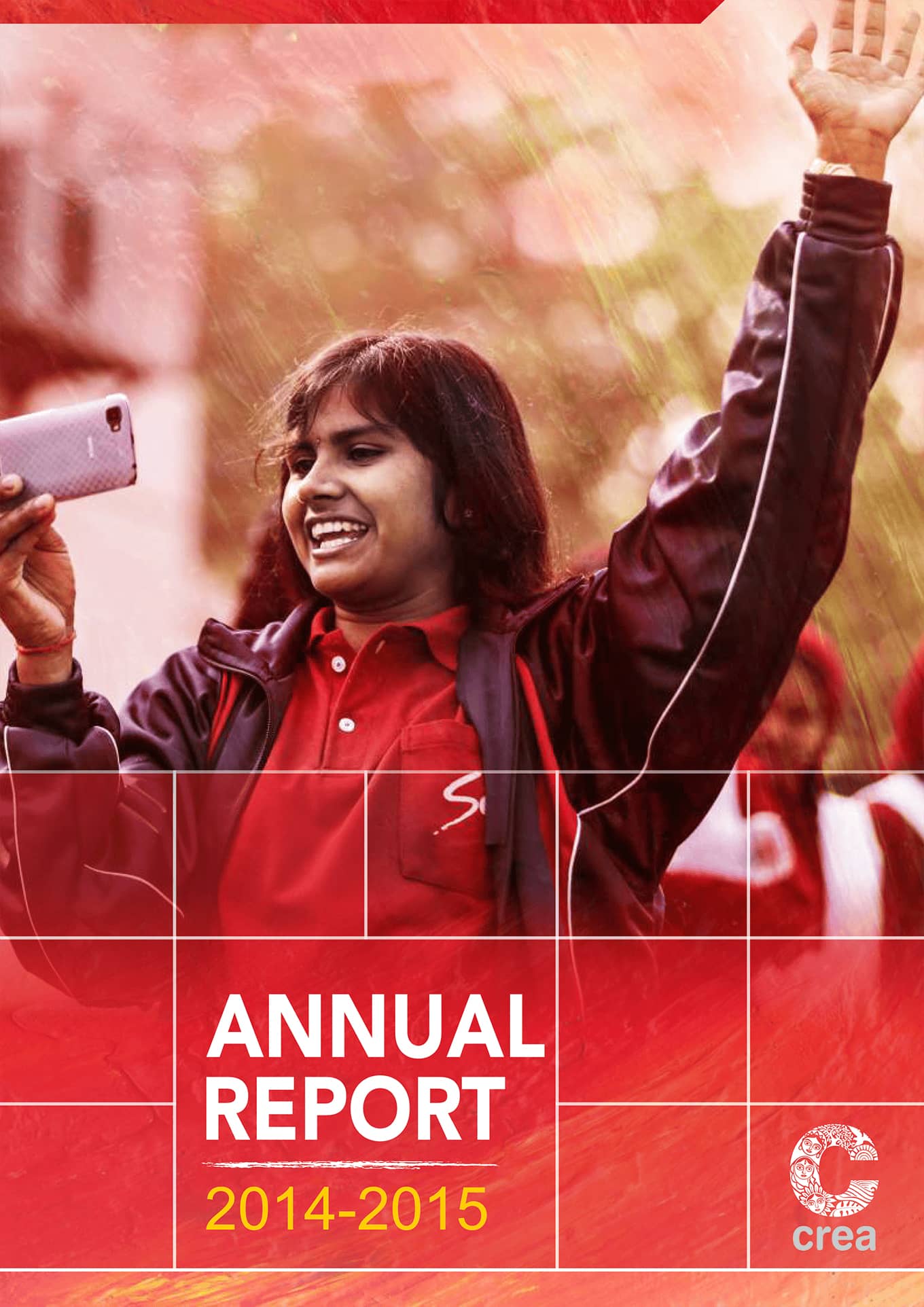
In 2014-15, CREA organised Institutes to further feminist leadership and to build understanding of activists and organisations working in conflict affected areas.
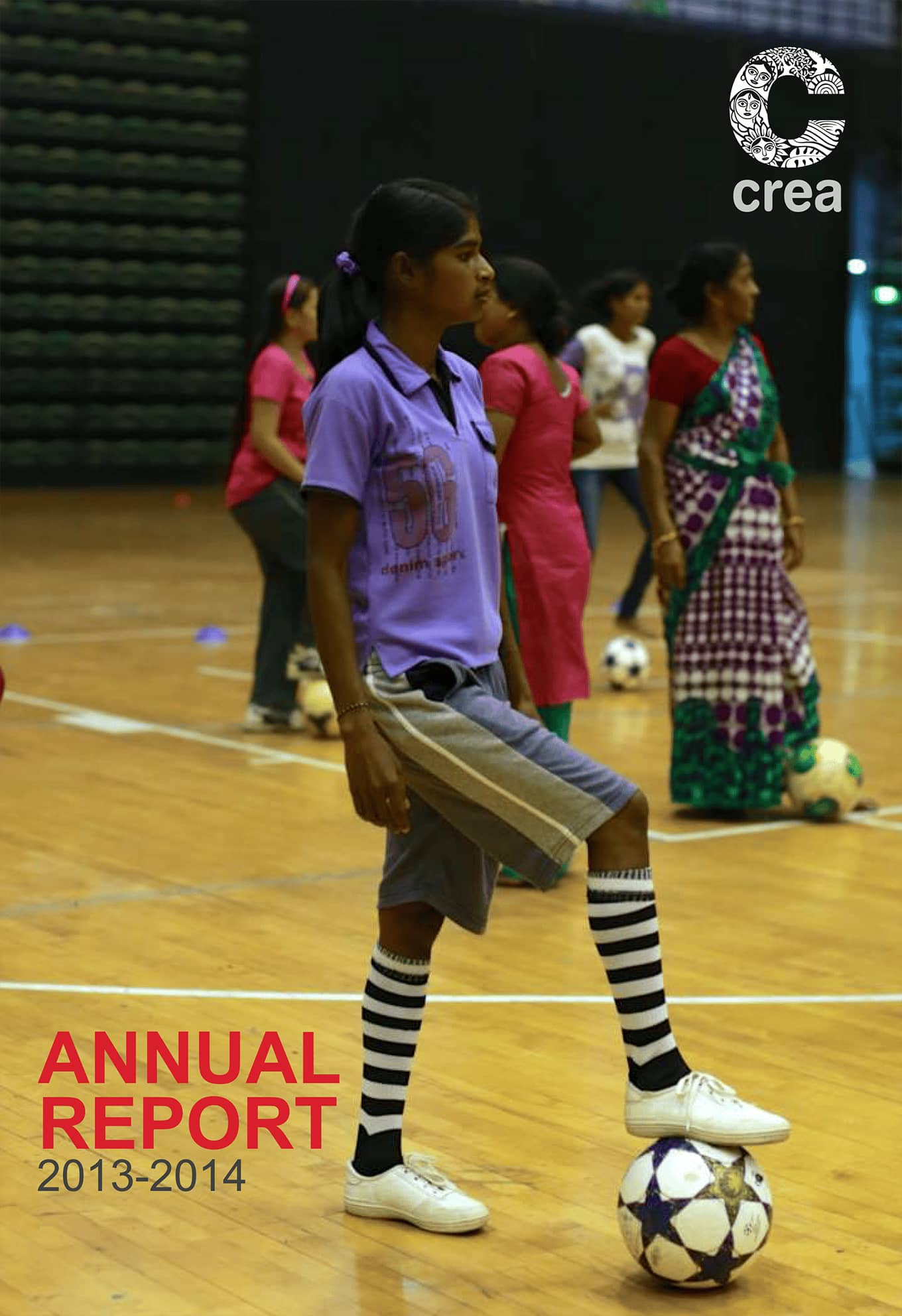
The Year 2013 – 2014 was a year of positive and constructive changes – to our initiatives, programmes, and partners!
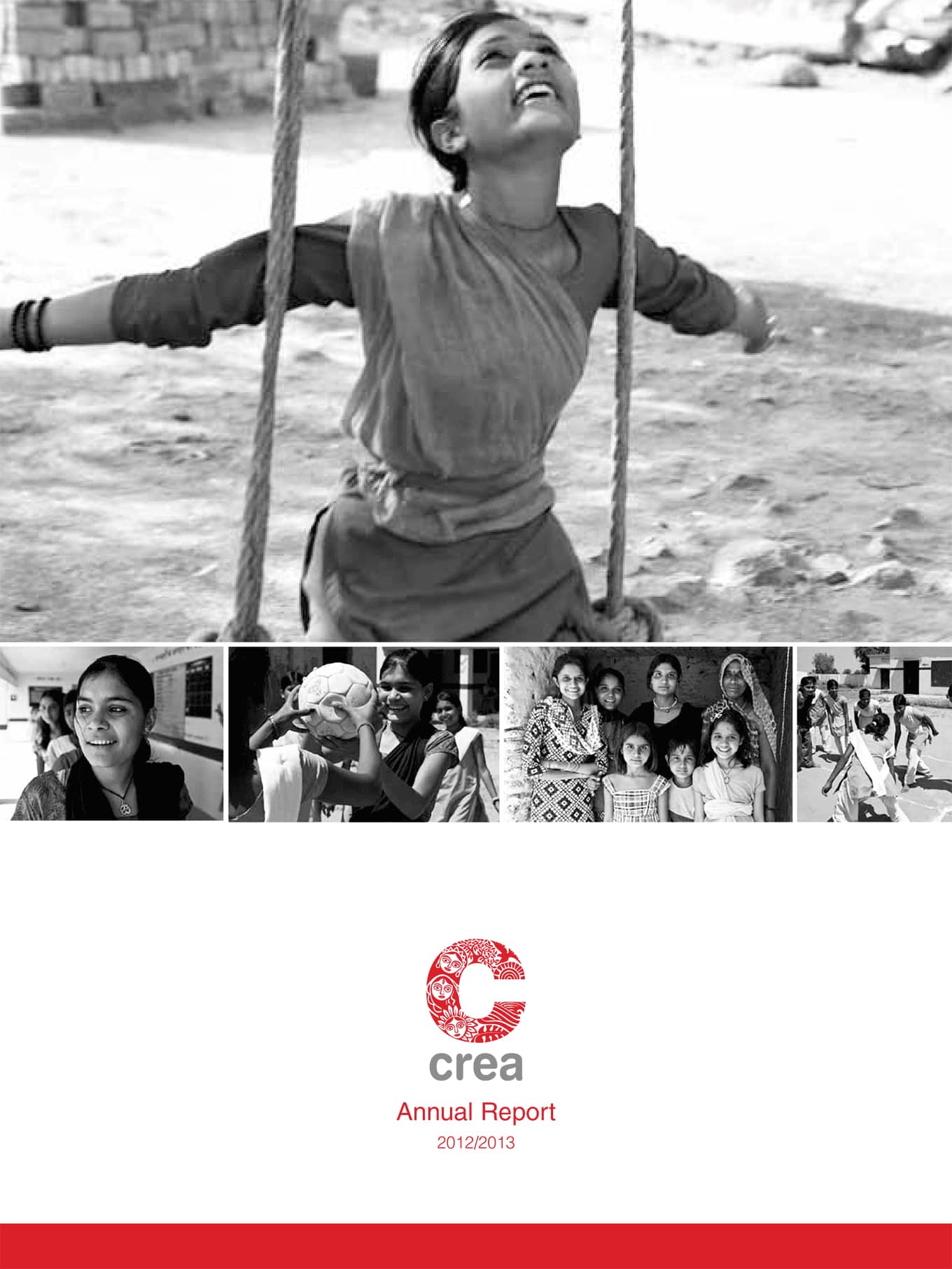
For CREA, the year 2012/13 brought in its stride new and innovative programmes, significant partnerships, and expansion of our networks.
As CREA completes a decade of its existence, we have an opportunity to reflect on the past and plan for the future.
At the global level, increased political instability, conflict, economic, food and health crises, and structural poverty have impacted the work of all NGOs.
During 2008 and 2009, CREA built the leadership capacities of women in the global south and other marginalized people, advocated sexual rights at levels local to international and expanded discourses on women’s rights and sexual rights.
The fifth Sexuality and Rights Institute was conducted in January 2006 in Pune, India.