

Tag articles
CREA develops publications and knowledge resources, in English and Hindi, in the fields of sexuality, reproductive health, gender, and human rights. These publications foreground global South perspectives and reduce the paucity of resources for Hindi-speaking activists and organisations.
All these resources and materials are made available here on the website, and are mailed out to the organisations and activists that CREA works with and disseminated through various other channels.
articles
25 Articles with tag
Sanitation needs and concerns are gendered, requiring law and policy frameworks to adopt a gender-sensitive approach to address the specific sanitation-related needs of women and girls.
The Kathmandu Declaration was issued by over 200 sex workers and allies from Bangladesh, India, Nepal, Pakistan, and Sri Lanka, who gathered for renew: South Asia Sex Workers’ Summit from 29 to 31 May 2024 in Kathmandu, Nepal.
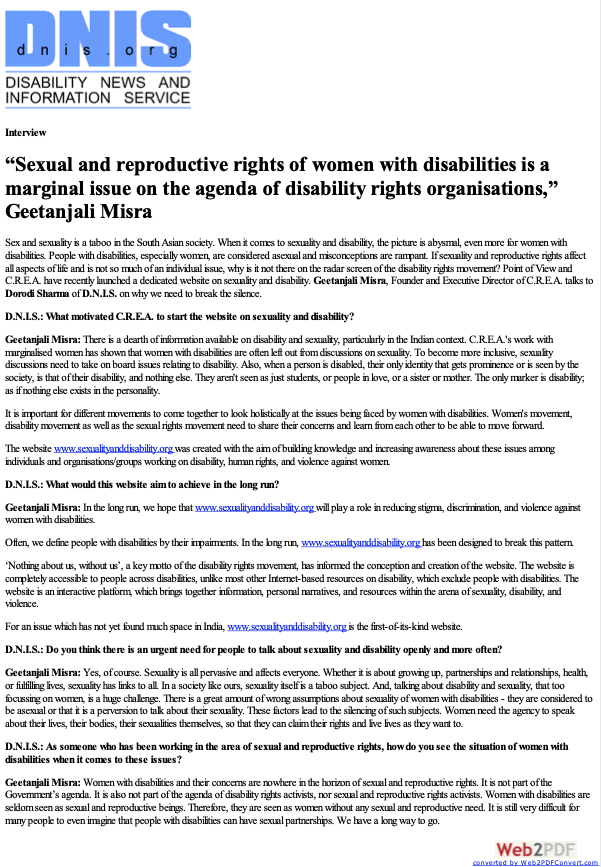
Sex and sexuality is a taboo in the South Asian society
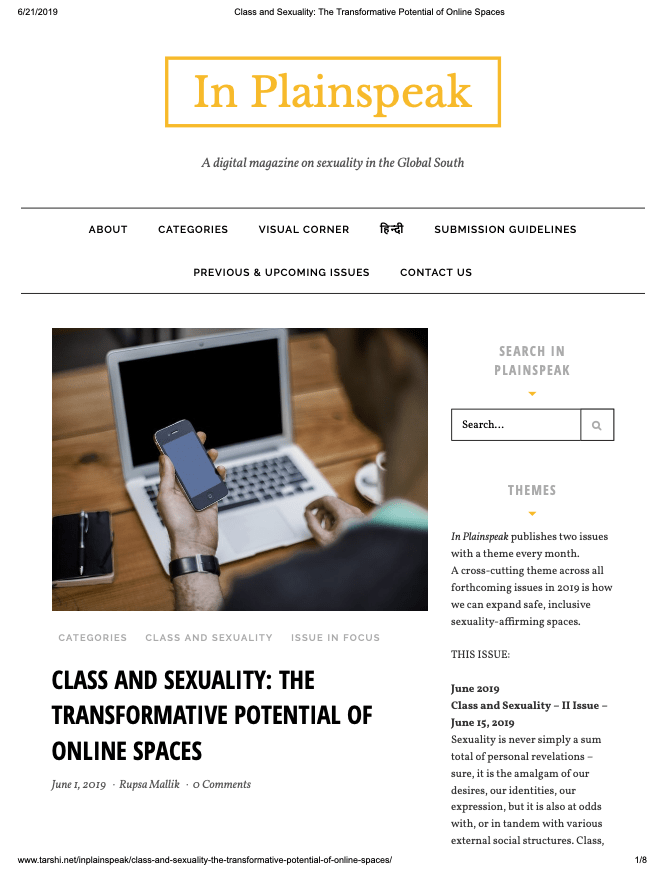
In this article I explore how information and communication technologies (ICTs) are blurring and redening subjective experiences of class and sexuality for adolescents and young people in India.
As many governments worldwide have raised the legal age of marriage to 18 years, some are also considering raising the age of sexual consent.
A guest blog from Pooja Badarinath, CREA
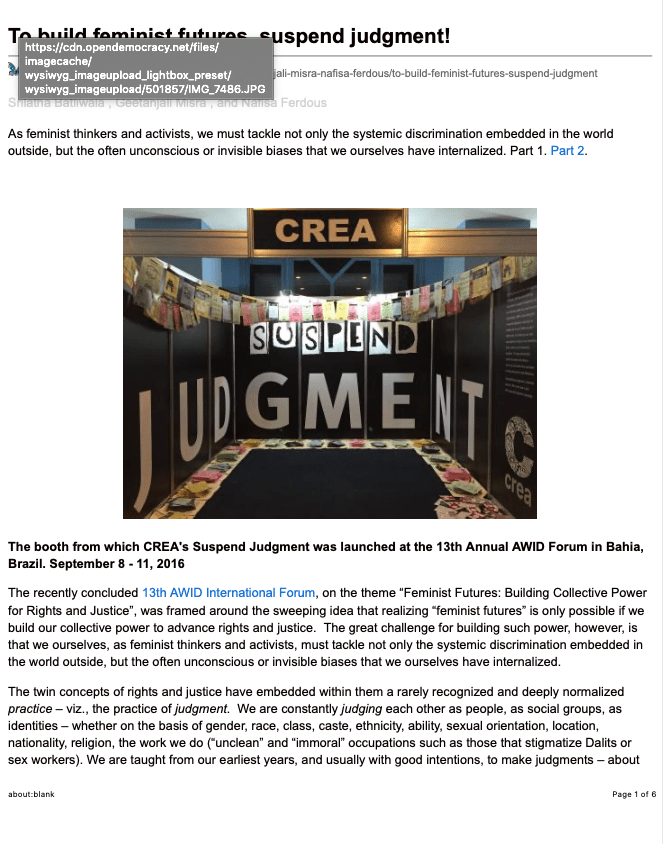
As feminist thinkers and activists, we must tackle not only the systemic discrimination embedded in the world outside, but the often unconscious or invisible biases that we ourselves have internalized.
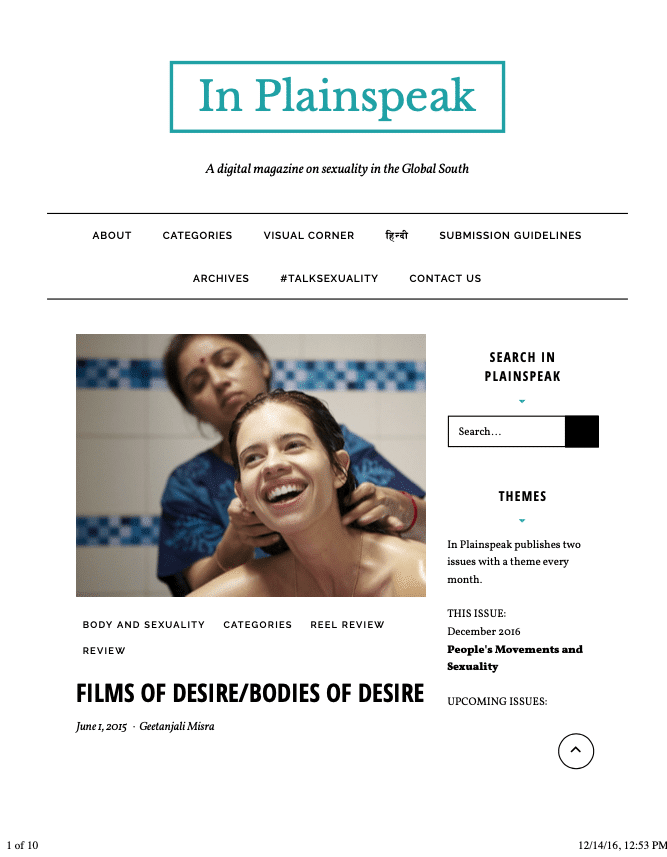
Bodies are central to human beings. And the way we experience our bodies is closely linked to how we experience desire.
There is growing consensus that the "crisis of masculinity" needs to be addressed and the focus of interventions on issues of gender and sexuality has to broaden beyond women to include men and other genders.
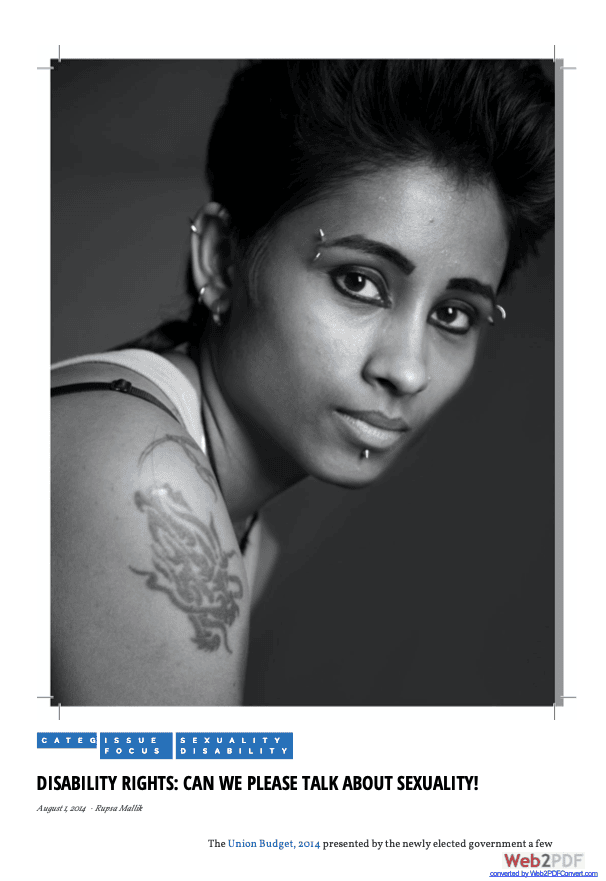
The Union Budget 2014 presented by the newly elected government a few weeks ago includes various provisions for disabled persons.
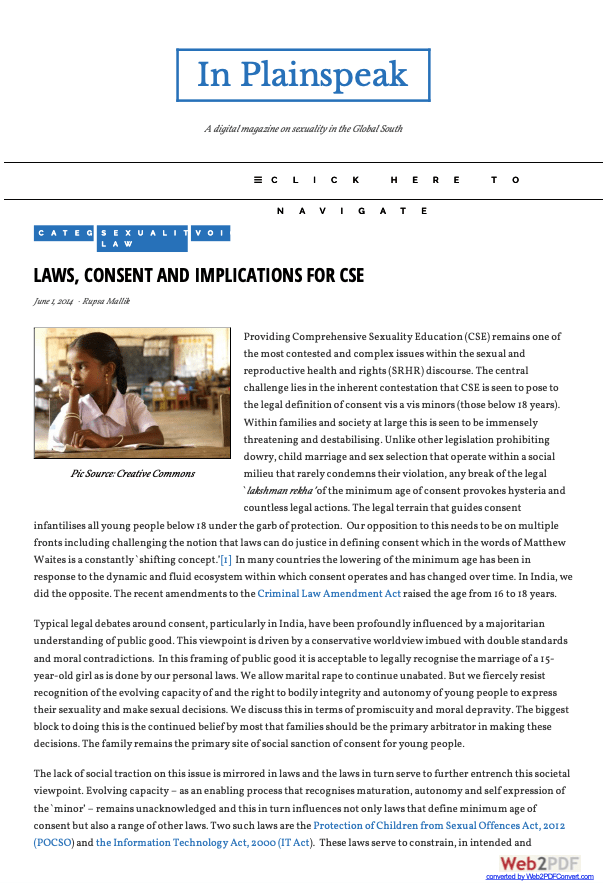
Providing Comprehensive Sexuality Education (CSE) remains one of the most contested and complex issues within the sexual and reproductive health and rights (SRHR) discourse.
In the international row over decriminalizing sex work, Geetanjali Misra takes issue with the online petition launched by the women's human rights organisation, Equality Now.
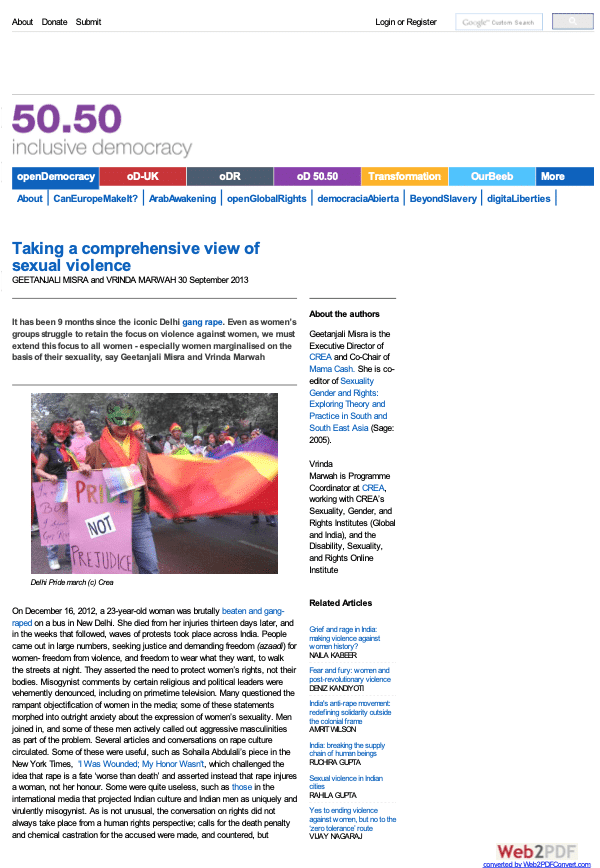
It has been 9 months since the iconic Delhi gang rape. Even as women’s groups struggle to retain the focus on violence against women, we must extend this focus to all women - especially women marginalised on the basis of their sexuality.
This is the fourth of a series of posts written from the experiences at CREA of implementing a program called “Count Me IN! It’s My Body: Advancing Sexual and Reproductive Health and Rights of Young Girls through Sports”.
This is the third of a series of posts written from the experiences at CREA of implementing a program called “Count Me IN! It’s My Body: Advancing Sexual and Reproductive Health and Rights of Young Girls through Sports”
This is the second of a series of posts written from the experiences at CREA of implementing a program called “Count Me IN! It’s My Body: Advancing Sexual and Reproductive Health and Rights of Young Girls through Sports”.
This is the first of a series of posts written from the experiences at CREA of implementing a program called “Count Me IN! It’s My Body: Advancing Sexual and Reproductive Health and Rights of Young Girls through Sports”.
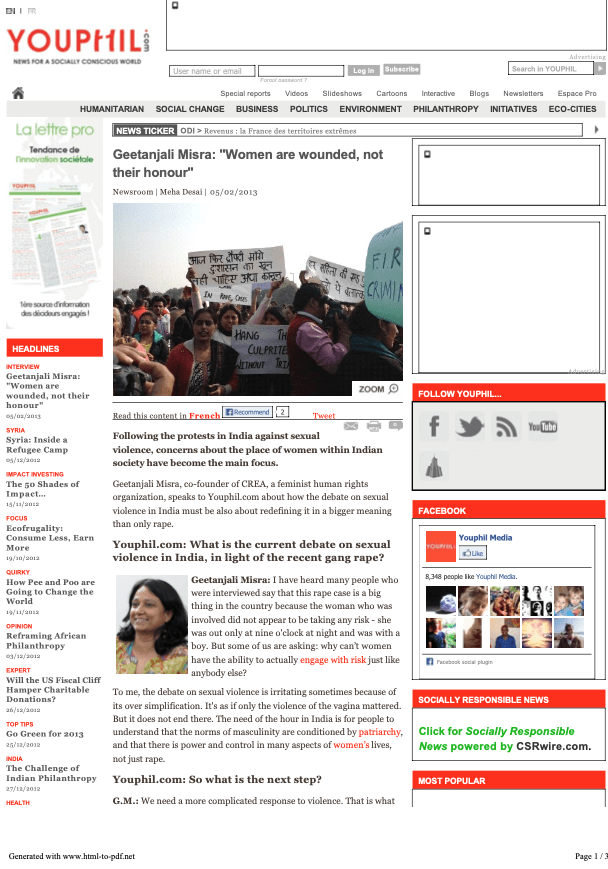
Following the protests in India against sexual violence, concerns about the place of women within Indian society have become the main focus.
The gang rape of a 23-year-old woman in New Delhi last December has provoked unprecedented protests across India.
This paper examines the successful fight against the provision in Section 377 of the Penal Code of India that criminalised private consensual sex between adults of the same sex.
Everything we know tells us that what creates lasting change is the slow lasting power of movements, but that creating this change takes generations.
Six years after the Indian government affirmed its commitment to the principles of the 1994 International Conference on Population and Development, there is still a limited understanding of the concept of reproductive and sexual health among policymakers.
Although India is a signatory to numerous international agreements on the rights of women and has a constitution that prohibits discrimination and exploitation by gender, it has failed to satisfactorily protect the human rights of women